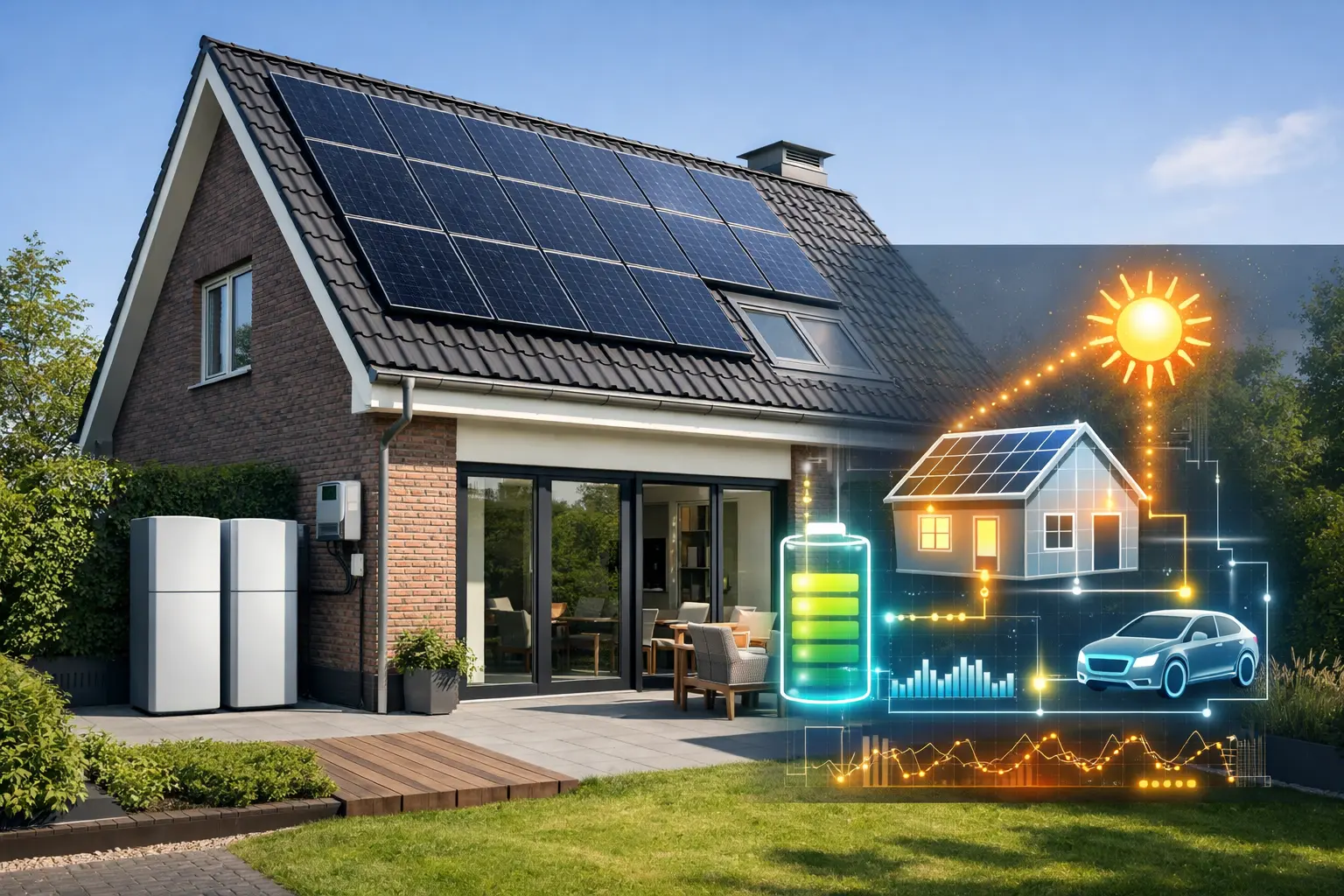
Hoe kan een thuisbatterij helpen bij een noodsituatie en wanneer niet?
WouterDecember 15, 2025
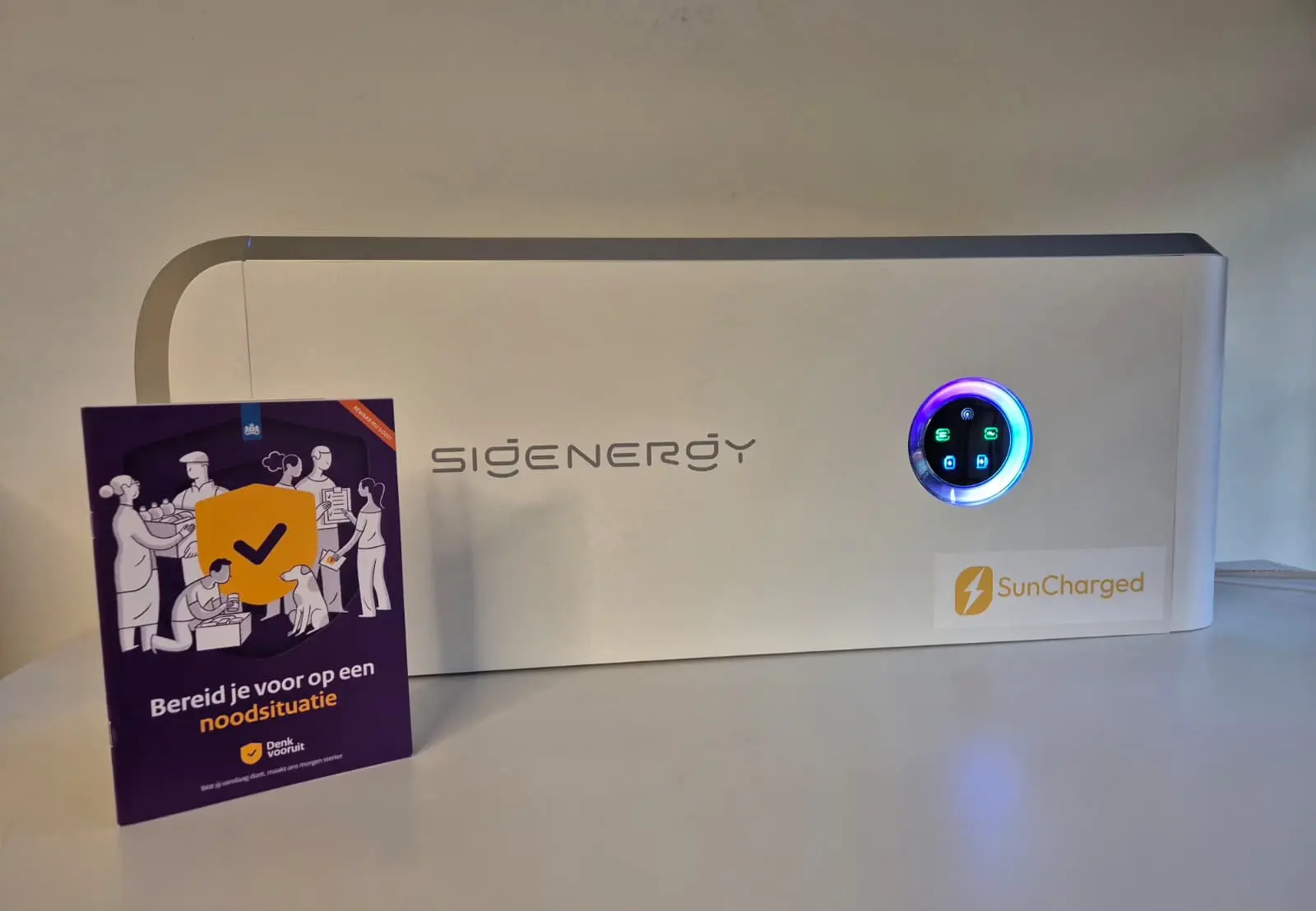
Noodstroomvoorzieningen met thuisbatterijen uitgelegd
Stel: de stroom valt uit. Niet voor een paar minuten, maar echt langdurig. Het huis wordt donker, de wifi valt weg, apparaten stoppen ermee. Precies zulke scenario’s beschrijft het landelijke noodplan: zorg dat je jezelf de eerste dagen kunt redden als hulpdiensten en netbeheerders nog niet overal kunnen zijn.
Een thuisbatterij kan dan een enorm verschil maken, afhankelijk van welke thuisbatterij en configuratie je kiest. Hieronder lees je wat een thuisbatterij voor je doet tijdens een noodsituatie, wat de beperkingen zijn en hoe je met de juiste configuratie zelfs grote energieverbruikers kunt blijven gebruiken.
Wat een thuisbatterij tijdens een storing voor je betekent
Wanneer het licht bij de buren uitvalt, blijft jouw huis wél werken. Een thuisbatterij zorgt ervoor dat je:
- verlichting hebt
- je telefoon en andere kleine apparaten kunt opladen
- je koelkast en eventueel je vriezer blijft draaien
- wifi of andere communicatievoorzieningen online blijven
- essentiële huishoudelijke apparatuur goed kan blijven functioneren
Dat gebeurt automatisch en zonder brandstof of uitstoot. Juist tijdens een storing geeft dat zekerheid en continuïteit in huis.
Maar dat geldt alleen voor systemen die ook écht back-up kunnen leveren. En daar zit het grote verschil.
Niet elke thuisbatterij is een noodstroomvoorziening
Er bestaan grofweg vier soorten oplossingen, en dat verschil is cruciaal.
1. Plug-in batterijen met stopcontacten
Dit zijn draagbare batterijen waarin je letterlijk een stekker kunt steken. Ze zijn eenvoudig en flexibel. Tijdens een stroomstoring kun je hier direct apparaten op aansluiten, zoals een lamp, telefoonoplader of apparatuur voor noodcommunicatie.
Ze zijn handig als noodvoorziening, maar beperken zich tot losse apparaten. Ze voeden je huis niet als geheel.
2. Thuisbatterijen gekoppeld aan de meterkast zonder back-upfunctie
Dit is de standaardconfiguratie die je het meest ziet. De batterij werkt samen met het net en zonnepanelen, maar valt uit zodra het net wegvalt. Dat klinkt tegenstrijdig, maar is zowel een veiligheidskeuze als een technische eigenschap. Zonder extra hardware kan de omvormer geen zelfstandig net vormen en kan de batterij geen stroom leveren bij een storing.
In een echte noodsituatie heb je hier dus niets aan. De batterij zit vol, maar je huis is alsnog spanningsloos.
3. Thuisbatterijen met gedeeltelijke back-up
Bij deze systemen wordt een selectie van groepen aangesloten op de batterij. Denk aan verlichting, stopcontacten voor dagelijks gebruik, koelkast en communicatieapparatuur. Zwaardere verbruikers worden bewust wel of niet meegenomen, afhankelijk van het systeem.
Bij stroomuitval schakelt het systeem automatisch over. Het vermogen is wel begrensd door de omvormer. Grote apparaten zoals een wasmachine of laadpaal worden vaak buiten de back-up geplaatst.
Dit is vaak een goede balans tussen kosten, techniek en functionaliteit. Voor dit type oplossing wordt in de praktijk vaak gekozen voor systemen van Anker SOLIX of SolarEdge Technologies.
4. Thuisbatterijen met volledige woning-back-up
Dit zijn de meest uitgebreide systemen. Ze kunnen de hele woning van stroom voorzien tijdens een storing. Hiervoor is een zwaardere omvormer nodig en een installatie die daar expliciet op is ontworpen.
Merken zoals Sigenergy Nederland, Enphase Energy en HYXiPOWER zijn hier sterk in. Dit komt het dichtst in de buurt van off-grid, al blijft ook hier de totale capaciteit uiteindelijk eindig.
Bij dit type systeem wordt vaak gekozen voor een grotere batterijcapaciteit. In de instellingen van de batterij kun je vastleggen hoeveel energie altijd wordt gereserveerd voor noodstroom. In de winter wordt deze reserve meestal hoger ingesteld dan in de zomer, vanwege de lagere zonne-opbrengst.
Wie ook bij langdurige storingen maximale zekerheid wil, kiest voor een noodstroomconfiguratie met een smart energy port. Hiermee kan indien nodig een aggregaat worden aangesloten om de batterijen bij te laden.
En hoe zit het met zonnepanelen tijdens een storing?
Veel mensen denken: “Ik heb zonnepanelen, dus ik heb altijd stroom.” Helaas werkt dat niet vanzelf.
Bij de meeste installaties schakelt de omvormer uit zodra het net wegvalt. Resultaat: de zon schijnt, maar je kunt de stroom niet gebruiken.
Wat wél werkt, is het kiezen van de juiste configuratie:
- een omvormer die geschikt is voor noodstroom en tijdens een storing wordt gevoed door de batterij
- zonnepanelen die direct op de batterij zijn aangesloten in een back-upconfiguratie
Alleen dan kun je overdag blijven opwekken en je batterij bijladen. Dat maakt het verschil tussen enkele uren en meerdere dagen zelfredzaamheid.
Het gebruik van grote energieverbruikers tijdens noodstroom
Veel communicatie over noodstroom zegt dat apparaten zoals warmtepompen, elektrische boilers, elektrische kachels en wasmachines niet gebruikt kunnen worden op een batterij. Voor kleine systemen klopt dat wel. Het hele verhaal is echter genuanceerder.
Bij batterijen van bijvoorbeeld 10 kWh of meer, gecombineerd met een krachtige omvormer en een grid-vormende thuisbatterij, is het mogelijk om ook zwaardere apparaten te gebruiken, mits het systeem hier technisch op is ontworpen. Denk aan:
- de koelkast en vriezer blijven functioneren
- een warmtepomp voor ruimteverwarming of warm water
- kleding wassen of de vaatwasser gebruiken
- koken op inductie
In de zomer kan een systeem met voldoende zonnepanelen en opslag zichzelf in stand houden, zolang het energieverbruik hierop wordt afgestemd. In dat geval ontstaat een zelfvoorzienend, zelf genererend energiesysteem.
Keuzes in energiegebruik tijdens noodstroom
Bij noodstroom draait het om keuzes maken. Elk apparaat dat je inschakelt verbruikt energie. Daarom is het belangrijk te bepalen wat op dat moment echt nodig is.
Dat betekent:
- zet energie-intensieve apparaten alleen in wanneer dit functioneel nodig is
- houd rekening met de resterende batterijcapaciteit en noodstroomduur
- stem omvormervermogen en batterijcapaciteit af op het beoogde gebruik
Op basis van deze uitgangspunten kan een noodstroomsysteem doelgericht worden ontworpen en gerealiseerd. Daarbij helpt het om tijdens een storing ook je verwachtingen aan te passen. Het huis hoeft niet volledig op 22 graden te worden verwarmd en een elektrische auto hoeft in zo’n situatie niet direct volledig te worden opgeladen.
Internet en communicatie tijdens noodstroom
Bij een stroomstoring is internet niet vanzelfsprekend beschikbaar, ook niet wanneer je modem en router via een thuisbatterij van stroom worden voorzien. Als de storing zich uitstrekt over de straat, wijk, stad of groter gebied, ligt vaak ook de infrastructuur van de internetprovider stil. Denk aan wijkkasten en centrales die zelf geen of beperkte noodstroom hebben. In dat geval blijft het netwerk onbereikbaar, ongeacht of je thuis nog stroom hebt.
Voor wie ook tijdens langdurige storingen toegang tot internet wil behouden, zijn alternatieven zoals mobiel internet of satellietinternet, bijvoorbeeld via Starlink, een optie. Dit soort oplossingen functioneren onafhankelijk van de lokale netwerkinfrastructuur, maar vragen wel om aanvullende apparatuur en energie.
Welke noodstroomoplossing past bij jouw situatie?
In dit artikel zijn vier verschillende noodstroomoplossingen met thuisbatterijen besproken. Welke oplossing het beste bij je past, hangt af van je persoonlijke situatie en verwachtingen. Hoeveel zonnepanelen heb je, hoe ver wil je voorbereid zijn op noodsituaties of een elektriciteitsnet dat minder betrouwbaar kan worden, welke apparatuur wil je tijdens een storing kunnen blijven gebruiken en welk budget past daarbij.
Er bestaat geen standaardoplossing die voor iedereen werkt. Het gaat om het vinden van de juiste balans tussen capaciteit, vermogen, autonomie en comfort, afgestemd op jouw woning en gebruik.
Als je wilt, kan SunCharged met je meedenken en op basis daarvan een passend noodstroomsysteem ontwerpen en realiseren.