MID-gecertificeerde laadpaal: wat is het en hoe verdien je met ERE-certificaten?
Wie thuis een elektrische auto laadt, kijkt bij een laadpaal vaak vooral naar het laadvermogen, de app en functies zoals load balancing of laden op zonne-energie.
Maar sinds 2026 is er nóg een eigenschap interessant geworden: een MID-gecertificeerde energiemeter.
Met een geschikte MID-gecertificeerde laadpaal kun je namelijk deelnemen aan de ERE-regeling. Daarmee kan iedere kWh die je thuis in je elektrische auto laadt extra geld opleveren.
En dat kan behoorlijk aantikken.
Wat is een MID-gecertificeerde laadpaal?
MID staat voor Measuring Instruments Directive. Simpel gezegd betekent dit dat de energiemeter in de laadpaal volgens Europese eisen is gecertificeerd om elektriciteitsverbruik nauwkeurig en controleerbaar te meten.
Dat is bijvoorbeeld belangrijk wanneer laadkosten worden gedeclareerd bij een werkgever.
Sinds 2026 heeft zo'n MID-meter nog een interessant voordeel. De gemeten laadstroom kan onder bepaalde voorwaarden worden gebruikt voor de Nederlandse ERE-regeling.
Daarvoor moet de MID-meter geïntegreerd zijn in het laadstation en moet duidelijk kunnen worden vastgesteld hoeveel elektriciteit daadwerkelijk naar de elektrische auto is gegaan.
Wat zijn ERE-certificaten?
ERE staat voor Emissiereductie-eenheid.
Elektrisch rijden zorgt voor minder CO₂-uitstoot dan rijden op benzine of diesel. Binnen het Nederlandse systeem kan deze vermeden uitstoot worden omgezet in verhandelbare ERE's.
Eén ERE vertegenwoordigt één kilogram vermeden CO₂-ketenemissie.
Waarom heeft dat financiële waarde?
Bedrijven die fossiele brandstoffen leveren aan de Nederlandse transportsector hebben verplichtingen om de uitstoot van vervoer steeds verder te reduceren. Dat kunnen ze onder andere doen door ERE's te kopen die elders zijn ontstaan.
Je kunt het dus enigszins zien als het principe 'de vervuiler betaalt'.
De elektrische kilometers die jij rijdt helpen de transportsector verduurzamen. De bijbehorende emissiereductie heeft waarde en een deel daarvan kan bij jou als eigenaar van de laadlocatie terechtkomen.
Het is dus niet simpelweg een subsidiepot van de overheid. ERE's worden daadwerkelijk verhandeld en de prijs wordt bepaald door vraag en aanbod.
Lees hier meer over de ERE-regeling.
Wat kan de ERE-regeling opleveren?
De waarde van ERE's staat niet vast en kan veranderen.
Op dit moment kun je als indicatie rekenen met ongeveer €0,12 tot €0,15 netto per thuisgeladen kWh, afhankelijk van de marktprijs en de kosten van je inboekdienstverlener.
Een eenvoudig voorbeeld.
- Je rijdt 20.000 kilometer per jaar.
- Ongeveer 10.000 kilometer daarvan laad je thuis.
- Je elektrische auto rijdt gemiddeld ongeveer 5 kilometer op 1 kWh.
- Daarvoor laad je dus circa 2.000 kWh per jaar thuis.
Bij een netto ERE-vergoeding van ongeveer €0,13 per kWh levert dat op:
2.000 kWh × €0,13 = ongeveer €260 per jaar
Laad je vrijwel al je 20.000 kilometer thuis, dan kom je bij hetzelfde verbruik uit op ongeveer 4.000 kWh. De vergoeding kan dan richting de €500 per jaar gaan.
Dat maakt de keuze voor een MID-gecertificeerde laadpaal ineens een stuk interessanter.
Let op: de ERE-prijs fluctueert. Zie bovenstaande bedragen daarom als indicatie en niet als gegarandeerde jaarlijkse opbrengst.
Heb je al een MID-gecertificeerde laadpaal?
Dan hoef je natuurlijk niet direct een nieuwe laadpaal te kopen.
Veel bestaande laadstations beschikken al over een geschikte MID-meter. In dat geval kun je controleren of jouw laadpaal geschikt is en deze aanmelden bij een inboekdienstverlener.
SunCharged werkt hiervoor samen met Joulo.
Via onze dedicated aanmeldlink betaal je 18% servicekosten in plaats van de standaard 20%. Dat is 10% korting op de gebruikelijke administratie- en servicefee.
Meld je via SunCharged aan bij Joulo
Na de koppeling worden geschikte laadsessies automatisch geregistreerd. Joulo verzorgt vervolgens de verwerking, inboeking en verkoop van de ERE's.
Een laadpaal moet onderdeel zijn van je energiesysteem
Bij SunCharged installeren we niet alleen laadpalen. We installeren ook zonnepanelen en thuisbatterijen.
Juist daarom vinden we het belangrijk dat deze apparaten goed met elkaar samenwerken.
Je wilt bijvoorbeeld niet dat je thuisbatterij 's avonds wordt leeggetrokken om vervolgens je auto op te laden, terwijl je diezelfde stroom goedkoper uit het net had kunnen halen.
Andersom wil je op een zonnige middag juist zoveel mogelijk van je eigen zonnestroom rechtstreeks in de auto kunnen stoppen.
Een moderne laadpaal kijkt daarom verder dan alleen: auto aansluiten en laden.
Onze drie favoriete oplossingen op dit moment zijn de volgende.
1. Zaptec Go 2
De Zaptec Go 2 is momenteel een van onze populairste laadpalen.
Hij is compact, kan tot 22 kW laden en beschikt over een geïntegreerde MID-gecertificeerde meter. In combinatie met Zaptec Sense kan de laadpaal rekening houden met het verbruik van de woning en laden op beschikbare zonne-energie.
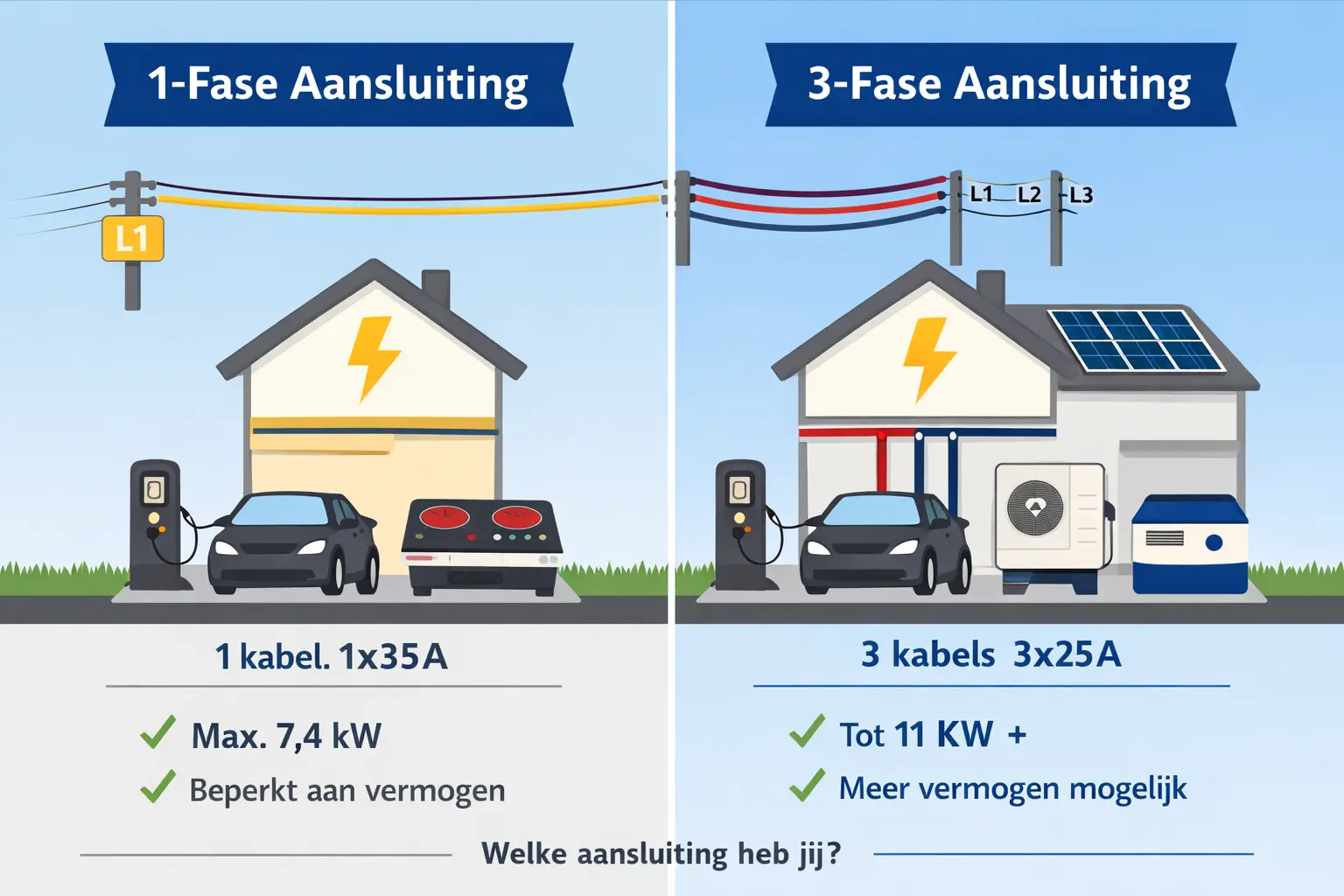
De Zaptec Go 2 kan bovendien automatisch schakelen tussen 1-fase en 3-fase laden. Daardoor kan hij ook bij een relatief klein overschot aan zonnestroom al beginnen met laden.
Een ander interessant onderdeel is dat de hardware is voorbereid op bidirectioneel laden, V2H en V2G.
Daar moeten we wel direct een kanttekening bij maken.
Hoewel de hardware hiervoor geschikt is, kun je op dit moment in Nederland nog niet simpelweg iedere geschikte elektrische auto aansluiten en vervolgens je woning vanuit de auto voeden.
Autofabrikanten, laadpaalfabrikanten, communicatieprotocollen, netcodes en standaarden zoals ISO 15118-20 moeten daarvoor allemaal goed op elkaar aansluiten.
Die markt is volop in ontwikkeling.
Zie de Zaptec Go 2 daarom vooral als bidirectioneel-ready. De benodigde hardware is erop voorbereid, maar V2H en V2G zijn in de praktijk nog geen universele plug-and-play-functionaliteit.
2. Enphase IQ EV Charger 2
Heb je al zonnepanelen of een thuisbatterij van Enphase? Dan vinden wij de Enphase IQ EV Charger 2 een hele logische keuze.
De laadpaal wordt onderdeel van het Enphase Energy System en kan daardoor heel mooi samenwerken met de rest van de installatie.
Hij beschikt over een geïntegreerde MID-gecertificeerde meter, ondersteunt dynamische load balancing en kan slim laden met overtollige zonne-energie.
Ook deze laadpaal kan automatisch schakelen tussen 1-fase en 3-fase. Daardoor kan het laden al starten bij relatief weinig beschikbaar zonnevermogen.
Het grote voordeel zit wat ons betreft vooral in het ecosysteem. Zonnepanelen, thuisbatterij, woningverbruik en elektrische auto komen samen in één energieplatform.
Bekijk de Enphase IQ EV Charger 2
3. SolarEdge ONE EV Charger Pro
Voor woningen met een SolarEdge-installatie is de SolarEdge ONE EV Charger Pro een interessante keuze.
Let hierbij specifiek op de Pro-uitvoering. Deze beschikt over de MID-gecertificeerde meter die voor ERE-registratie nodig is.
De kracht zit opnieuw in de integratie.
Wanneer zonnepanelen, omvormer, thuisbatterij en laadpaal allemaal onderdeel zijn van hetzelfde SolarEdge-ecosysteem, kan de beschikbare energie veel slimmer over de woning worden verdeeld.
Je kunt bijvoorbeeld rekening houden met zonneproductie, batterijopslag, woningverbruik en het laden van de auto. Zo bepaal je veel beter waar je beschikbare energie naartoe gaat.
Je kunt binnen het ecosysteem bijvoorbeeld keuzes maken over de prioriteit van het laden van de auto, het opslaan van energie in de thuisbatterij en het energieverbruik van de woning.
Dat is precies hoe wij bij SunCharged naar energiebeheer kijken. Niet ieder apparaat afzonderlijk optimaliseren, maar zorgen dat het hele huis als één energiesysteem functioneert.
Bekijk de SolarEdge ONE EV Charger
Welke laadpaal past bij jouw woning?
Er bestaat wat ons betreft niet één laadpaal die voor iedereen de beste is.
Heb je Enphase zonnepanelen en een Enphase thuisbatterij? Dan is Enphase vaak logisch.
Heb je een complete SolarEdge-installatie? Dan ligt SolarEdge voor de hand.
Zoek je juist een compacte, merk-onafhankelijke en toekomstgerichte laadpaal? Dan is de Zaptec Go 2 op dit moment één van onze favorieten.
Belangrijk is vooral dat we kijken naar:
- je huidige elektrische aansluiting;
- je elektrische auto;
- je zonnepanelen;
- een eventuele thuisbatterij;
- dynamische energieprijzen;
- load balancing;
- laden op zonne-energie;
- MID-certificering en ERE-registratie;
- eventuele toekomstige V2H- of V2G-mogelijkheden.
Dan ontstaat er een laadoplossing waar je niet alleen vandaag iets aan hebt, maar die ook past bij hoe je woning de komende jaren energie gaat gebruiken.
SunCharged installeert wekelijks laadpalen
Naast thuisbatterijen en zonnepanelen installeren we bij SunCharged wekelijks laadpalen door heel Nederland.
Van een losse laadpaal aan de gevel tot complete energiesystemen met zonnepanelen, thuisbatterij, dynamische aansturing en slim laden van de elektrische auto.
Bekijk hier een greep uit onze laadpaalinstallaties.
Heb je al een geschikte MID-gecertificeerde laadpaal? Dan kun je je via onze partner Joulo aanmelden voor de ERE-regeling.
Meld je laadpaal aan via Joulo en SunCharged
Wil je een nieuwe laadpaal en meteen zorgen dat zonnepanelen, thuisbatterij en elektrische auto optimaal samenwerken?
Dan helpen we je graag.
Laat je gegevens achter voor een vrijblijvende offerte. Wij nemen contact met je op en kijken welke laadoplossing het beste bij jouw woning en energieverbruik past.